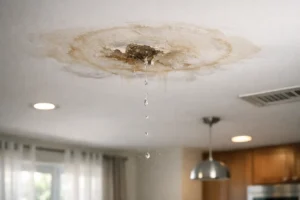
A water stain on a ceiling tile rarely tells the full story. In commercial buildings, moisture often travels far from the point where it enters, hides behind finishes, and quietly affects insulation, wall systems, flooring, and indoor conditions long before obvious damage appears. That is why a commercial moisture intrusion inspection matters. It gives owners, buyers, property managers, and facility teams a clear picture of where moisture is entering, how far it has spread, and what needs attention now versus what can be planned.
For commercial properties, moisture is not just a maintenance nuisance. It can interrupt operations, shorten the life of building materials, trigger tenant complaints, and lead to expensive repairs if the source is missed. The financial risk increases when decisions are made based on assumptions instead of documented field evidence. A focused inspection replaces guesswork with findings you can use.
What a commercial moisture intrusion inspection looks for
At its core, a commercial moisture intrusion inspection is an investigation of unwanted water movement into or within a building. The goal is not simply to confirm that moisture is present. The real objective is to identify likely entry points, affected materials, extent of damage, and conditions that may allow the problem to continue.
That work usually begins with the building envelope and the areas most vulnerable to water entry. Roof transitions, wall penetrations, window perimeters, parapets, sealant joints, cladding interfaces, exterior doors, plumbing chases, wet rooms, and below-grade conditions are all common concern areas. Inside the building, the inspection may focus on stained finishes, damaged flooring, elevated humidity, musty odors, visible microbial growth, or recurring leaks reported by occupants.
Commercial buildings make this more complicated than many people expect. Water may enter at one elevation and appear on another floor. HVAC conditions can affect where condensation forms. Repairs completed years earlier may conceal the original path of intrusion without correcting it. A proper inspection accounts for these variables instead of treating every stain as an isolated issue.
Why moisture problems are often missed
Many moisture issues stay hidden because surface symptoms are inconsistent. A wall can look dry while insulation behind it is wet. A roof leak can be blamed on rainfall, even though condensation is the actual source. Flooring can fail months after an event that initially seemed minor.
This is where method matters. A careful inspection combines visual assessment with diagnostic tools that help verify conditions behind or beneath the visible surface. Thermal imaging can help identify temperature differences consistent with moisture patterns. Moisture meters help confirm whether building materials are retaining elevated moisture. High-resolution documentation captures the location and extent of findings so owners and decision-makers can review the evidence clearly.
No single tool provides every answer. Thermal imaging, for example, can highlight anomalies, but it does not by itself prove active moisture intrusion. Meter readings add useful confirmation, but interpretation depends on material type and access. Good inspection work comes from using these tools together and understanding what the patterns actually mean in the context of the building.
When to schedule a commercial moisture intrusion inspection
Sometimes the need is obvious, such as after a roof leak, plumbing failure, storm event, or repeated tenant complaint. Other times, the timing is strategic. Buyers often request a commercial moisture intrusion inspection during due diligence when there are signs of deferred maintenance, unexplained staining, or a history of water entry. Property managers may schedule one before a lease renewal, capital planning cycle, or major interior renovation.
It also makes sense when repairs have already been attempted but the problem keeps returning. Repeated patching without a clear diagnosis can cost more than a focused inspection. If water is entering through a window assembly but staining appears at the base of an interior wall, treating only the visible damage will not solve the problem.
For owners with multiple buildings, inspections can support prioritization. Not every moisture issue requires the same response timeline. Some findings point to active deterioration or immediate operational risk. Others indicate manageable conditions that should be addressed during planned maintenance. Knowing the difference helps control cost and avoid overreaction.
Commercial moisture intrusion inspection methods that add clarity
A strong inspection process is systematic. It starts with background information such as building age, construction type, maintenance history, leak reports, prior repairs, and weather exposure. That context helps narrow likely failure points and avoid wasting time on assumptions that do not fit the building.
Fieldwork typically includes a detailed visual review of exterior and interior conditions, followed by targeted diagnostic testing where warranted. Thermal imaging is especially useful for scanning broad areas efficiently and identifying hidden anomalies that deserve closer review. Moisture detection tools help determine whether drywall, wood, insulation-facing materials, or other accessible components show elevated readings.
Documentation is just as important as detection. Commercial clients often need more than a verbal opinion. They need photos, location references, descriptions of conditions observed, likely causes, and practical recommendations. A report should help a building owner explain the issue to contractors, insurers, asset managers, or legal counsel if needed. It should also distinguish between confirmed findings and areas that may require additional invasive review.
That distinction matters. In some cases, non-invasive inspection can strongly indicate the source and extent of a problem. In other cases, concealed cavities or complex wall systems limit what can be verified without selective opening. Clear reporting should say so plainly. Confidence comes from honest limits as much as from technical findings.
What clients gain from early detection
The biggest benefit is not just finding water. It is finding the problem before it expands into a larger scope of repair. Wet materials can lose performance, finishes can fail, and hidden conditions can spread into adjacent spaces while day-to-day operations continue. Early detection gives owners options.
For acquisition teams, that can mean negotiating repairs, adjusting reserves, or deciding whether the risk profile still fits the deal. For property managers, it can mean fixing the source before tenant satisfaction is affected. For owners planning renovations, it can prevent new finishes from being installed over unresolved moisture conditions.
There is also a documentation benefit. In commercial settings, moisture issues often involve several parties, such as owners, tenants, contractors, insurers, and maintenance teams. A well-executed inspection creates a factual record of observed conditions at a specific point in time. That record can reduce confusion and support better communication about next steps.
What a good report should tell you
A useful report does more than say moisture was found. It should identify where elevated moisture was detected, what materials appeared affected, what visible damage was present, and what conditions suggest likely entry or accumulation points. It should also explain the practical significance of the findings in plain language.
Not every client reading the report has the same background. An investor may want to understand cost exposure and urgency. A facility manager may want exact locations and repair priorities. A contractor may need enough detail to scope corrective work responsibly. The best reports serve all three audiences at once by being technical where necessary and straightforward everywhere else.
This is where thoroughness and speed should work together. Fast reporting is valuable, but only if the findings are organized, supported, and actionable. Archer Professional Inspections approaches moisture-related assessments with that balance in mind, combining field diagnostics with clear documentation that helps clients move from uncertainty to informed decisions.
Choosing the right response after the inspection
An inspection is the starting point, not the finish line. Once findings are documented, the next step depends on severity, occupancy, access, and building use. Some situations call for immediate corrective work to stop active water entry. Others require further targeted opening to confirm concealed conditions before repairs are designed. In a large commercial property, phasing may be the most practical choice, especially when operations must continue.
There is rarely a one-size-fits-all answer. A small area of isolated moisture near a known plumbing fixture is different from widespread elevated readings along an exterior wall line. A vacant building offers different repair options than a medical office, school, or occupied retail space. The right path is the one that matches the building, the risk, and the evidence.
If you suspect moisture intrusion, waiting for more visible damage usually makes the decision harder, not easier. A careful inspection gives you a factual basis for action, whether that means urgent repair, planned maintenance, or deeper investigation. When the stakes involve property value, tenant experience, and repair cost, clarity is worth getting early.