A commercial property can look well maintained during a showing and still carry expensive liabilities behind ceiling tiles, above the roofline, or inside equipment rooms. The right commercial acquisition inspection questions turn a walkthrough into a documented decision process – one that gives buyers a clearer view of repair exposure, operating risk, and near-term capital needs before closing.
For investors, owner-users, lenders, and property managers, the goal is not to make a building appear perfect. It is to understand its actual condition, determine what must be addressed, and decide whether the purchase price, contract terms, and future budget still make sense.
Start With the Inspection Scope
Before asking what is wrong with the property, ask what the inspection will evaluate. A vague scope can leave major systems outside the review and create false confidence in the final report.
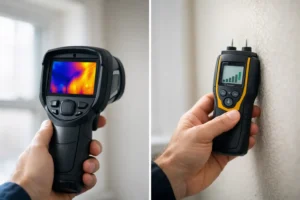
Ask whether the assessment includes accessible roof areas, exterior walls, drainage, parking areas, mechanical equipment, electrical distribution, plumbing, fire and life-safety components, and representative interior spaces. Also clarify whether the inspector will use tools such as thermal imaging and moisture detection when conditions warrant them.
The distinction between a general walkthrough and a commercial property condition assessment matters. A thorough assessment documents observed conditions, identifies deficiencies, includes clear photographs, and separates immediate concerns from items that can be planned over time. If a component cannot be accessed, that limitation should be stated plainly rather than buried in generic language.
A useful question is: What will be inspected, what will not be inspected, and why? The answer establishes the boundaries of the due-diligence record.
Commercial Acquisition Inspection Questions About Major Costs
The largest acquisition surprises usually come from a small number of high-cost systems. Ask direct questions that help quantify timing, not merely identify defects.
Roof, drainage, and exterior protection
Ask: What is the apparent condition of the roof covering, flashings, penetrations, drains, gutters, and downspouts? Follow with: Are there signs of active or past leakage, ponding, blocked drainage, or moisture intrusion?
Roof age alone is not enough to predict performance. Installation quality, maintenance history, drainage design, prior repairs, and exposure all influence useful life. An inspector should distinguish between localized maintenance, broader repair work, and conditions that merit prompt contractor evaluation.
At the exterior, ask whether wall finishes, windows, doors, sealants, and visible foundations show openings or deterioration that could permit water entry. Water often creates the most consequential hidden damage because it can affect finishes, insulation, indoor air quality, and occupied areas long before a visible stain appears.
Mechanical, electrical, and plumbing systems
Ask: What is the age, apparent condition, and expected service horizon of the heating, cooling, ventilation, electrical, and plumbing systems? The answer should address more than whether equipment was operating at the time of inspection.
For mechanical equipment, request observations about maintenance, visible leaks, corrosion, unusual noise, damaged insulation, and controls. For electrical systems, ask about panel condition, labeling, visible overheating, open knockouts, obsolete equipment, and capacity concerns apparent during the inspection. For plumbing, ask about visible supply and drain conditions, water heater age, evidence of leaks, and signs of recurring moisture around fixtures or mechanical rooms.
No visual inspection can guarantee future equipment performance. That is the trade-off. But a careful report can identify conditions that justify specialist review, maintenance records requests, or a repair allowance before the transaction is finalized.
Fire and life safety
Ask: Which life-safety features were observed, and were any visible deficiencies noted? Depending on the property, this may include exit access, emergency lighting, fire extinguishers, alarm components, sprinkler-related observations, doors, stairs, handrails, and guardrails.
An inspection is not a code certification unless that service is specifically included. Still, visible safety concerns should be documented because they can affect occupancy, tenant operations, insurance discussions, and immediate repair priorities.
Questions That Connect Findings to the Purchase Decision
A report is most valuable when it helps the buyer act. Avoid accepting a list of observations without asking how those observations affect cost, timing, and negotiations.
Ask these commercial acquisition inspection questions before contingencies expire:
- Which conditions require immediate attention to reduce safety, water-intrusion, or operational risk?
- Which items should be budgeted within the first year of ownership?
- Which systems may require major repair or replacement during the next three to five years?
- Are there recurring maintenance issues that suggest a larger underlying problem?
- Which findings require evaluation by a qualified trade contractor or other specialist?
- Are the photographs and descriptions detailed enough to support repair pricing and seller discussions?
The inspector should be able to explain why an item is categorized as immediate, near-term, or longer-range. A loose handrail and an aging roof may both appear in a report, but they require very different responses. Prioritization helps decision-makers direct attention and capital where it matters most.
Ask for Documentation, Not Assumptions
Inspection findings should be reviewed alongside the seller’s records. Ask for roof warranties, equipment service logs, renovation permits, invoices for major repairs, maintenance agreements, utility information, and records of prior water events or insurance claims where available.
Then ask: Do the records support what was observed on site? A recently serviced unit with documented maintenance may present a different risk profile than similar equipment with no available history. Conversely, fresh paint or a recent patch should not be treated as proof that an underlying issue has been corrected.
It is also wise to ask whether tenant spaces, locked rooms, roofs, crawl areas, or equipment closets were inaccessible during the inspection. Access limitations can matter as much as visible findings. If a critical area was unavailable, arrange access before closing when possible, or account for the uncertainty in the transaction terms.
Consider the Property’s Intended Use
The right questions change with the building’s use. A retail property may require close attention to storefront conditions, parking, public access, and signage-related penetrations. An office property may raise questions about HVAC zoning, restroom capacity, and interior moisture indicators. Warehouse, medical, restaurant, educational, and multifamily properties each introduce different operational demands.
Ask: Does the observed condition support our intended use without material upgrades or deferred repairs? This is especially important for buyers planning a change in occupancy, renovation, or expansion. A property that functions adequately for its current owner may not suit the buyer’s operational needs.
For occupied properties, ask about tenant complaints, recurring repairs, comfort issues, leaks, electrical interruptions, and areas that have been difficult to maintain. Site staff often know where problems recur, even when those problems are not visible during a single inspection visit.
Make the Report Usable After Closing
A commercial inspection report should remain useful after the acquisition, not disappear into the transaction file. Ask whether the report provides high-resolution visual documentation, locations for observed concerns, practical recommendations, and a format that can be shared with contractors, asset managers, insurers, or legal counsel when needed.
Fast delivery also matters. Findings delivered within 24 hours can give the acquisition team time to obtain estimates, seek clarification, and make informed decisions before key deadlines. Archer Professional Inspections approaches commercial evaluations with this decision-support focus: clear documentation, practical priorities, and findings explained in plain language.
The final question to ask is simple: What would you want addressed if this were your own investment? A qualified inspector should not make the purchase decision for you. They should give you the evidence, context, and clear next steps needed to make that decision with fewer unknowns.