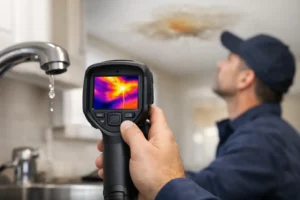
A roof leak noted during a property inspection can trigger two very different documents: an inspection report and a repair estimate. Confusing them can lead to missed defects, unrealistic repair budgets, or negotiations based on incomplete information. Understanding an inspection report versus estimate helps buyers, owners, investors, and property managers make decisions from the right evidence at the right time.
An inspection report identifies and documents observed property conditions. An estimate defines the anticipated work and cost to address a specific condition. Both are valuable, but they answer different questions.
Inspection Report Versus Estimate: The Core Difference
An inspection report answers, “What condition is the property in?” It records what the inspector observed during the assessment, including visible deficiencies, safety concerns, signs of moisture intrusion, aging components, deferred maintenance, and conditions that may warrant further evaluation. A quality report explains where the issue was found, why it matters, and what next step is appropriate.
An estimate answers, “What will it likely cost to complete this work?” A contractor, specialty trade, or repair professional prepares an estimate based on a proposed scope of work. It may include labor, materials, equipment, permits, disposal, timelines, exclusions, and warranty terms.
The distinction matters because a report is not a bid, and an estimate is not a complete property assessment. A contractor can accurately price the work they have been asked to perform while still not evaluating every related system or hidden condition. Likewise, an inspector can clearly document an issue without assigning a repair price that depends on site access, material selection, local labor costs, and the contractor’s chosen method.
What an Inspection Report Should Give You
A thorough inspection report is a decision-support document. Its purpose is to turn on-site observations into organized, understandable information you can use during a purchase, maintenance review, insurance matter, or property planning process.
For a residential buyer, the report may identify conditions affecting the roof covering, electrical components, plumbing fixtures, heating and cooling equipment, attic areas, exterior surfaces, drainage, and interior finishes. For a commercial client, the scope may address building systems, life-safety concerns, site conditions, repair needs, and longer-term capital planning items.
Strong reporting does more than list defects. It provides high-resolution photographs, location details, concise explanations, and recommendations that distinguish between routine maintenance, repairs that should be addressed promptly, and conditions that require specialized evaluation. Advanced tools such as thermal imaging and moisture detection can add useful evidence when conditions allow, especially where staining, leaks, or concealed moisture are concerns.
Just as important, an inspection report documents what was visible and accessible on the inspection date. It is not a guarantee that no concealed problems exist, nor is it a construction plan. Its value is in providing an independent, methodical snapshot of property conditions before you commit more money or make a major decision.
What a Repair Estimate Should Give You
A repair estimate should be specific enough to let you compare proposals and understand what the contractor intends to do. A vague line item such as “repair leak” does not provide much protection for the property owner. The estimate should identify the affected area, describe the planned work, state the materials or allowances included, and disclose what is excluded.
The most useful estimates also separate immediate repair work from optional improvements. For example, a proposal may price replacement of damaged flashing, include a separate allowance for interior finish repairs, and explain that hidden deterioration discovered after removal would require additional authorization. That level of detail helps prevent surprises after work begins.
Price is only one part of the evaluation. Two estimates can differ substantially because the contractors are proposing different scopes, materials, warranty coverage, access methods, or assumptions. The lowest figure is not automatically the best value if it leaves out work needed to correct the underlying condition.
Why One Document Cannot Replace the Other
Property decisions often go wrong when someone asks an inspector for a definitive repair price or relies on a contractor’s estimate as proof that the entire property has been evaluated. Those shortcuts create gaps.
An inspection report is typically broad in coverage and independent in purpose. It helps identify conditions across the property and provides context for prioritizing further action. An estimate is narrow by design. It prices a particular repair approach after the contractor has reviewed the affected area and defined what they are willing to perform.
Consider a bathroom ceiling stain. The inspection report may document staining, elevated moisture readings, and indications that the source should be identified and corrected. A plumbing estimate might then price replacement of a leaking drain connection. If the contractor only addresses the drain but the shower enclosure also leaks, the estimate was not necessarily wrong. It simply addressed a more limited scope than the inspection findings suggested.
The same principle applies to commercial assets. A property condition report can identify aging equipment, water-management concerns, and deferred maintenance across a facility. Individual trade estimates are then used to plan projects, validate budgets, and establish repair priorities. One document establishes the condition picture; the other helps convert selected needs into a work plan.
How to Use Both Documents Before a Major Decision
Start with the inspection report. Read the full report, not only the summary. Photos, narrative comments, and recommendations often provide the context needed to understand whether an issue is isolated, recurring, cosmetic, or likely to affect other components.
Next, identify the items that require pricing or further review. This usually includes active leaks, electrical safety concerns, heating and cooling deficiencies, drainage problems, damaged roofing materials, or conditions that could lead to escalating damage. Not every report item needs an immediate estimate. Minor maintenance recommendations may be better handled through a future to-do list.
When requesting estimates, provide the relevant report pages and photographs. Ask each contractor to explain their proposed scope in writing. If estimates vary, compare the included work before comparing the totals. One proposal may include removal and replacement of affected finishes, while another may only address the visible symptom.
For a real estate transaction, buyers should avoid treating an estimate as a demand list without first deciding what outcome they need. Depending on the market, the property condition, and the seriousness of the findings, it may make sense to request repairs, seek a credit, renegotiate the price, obtain additional evaluations, or proceed with a clear maintenance budget. There is no single correct response to every finding.
Questions That Make Estimates More Reliable
Before accepting an estimate, confirm whether the contractor inspected the condition in person or priced it solely from the report. Report documentation is useful, but field verification often affects the final scope.
Ask whether permits, material allowances, disposal, access equipment, finish restoration, and taxes are included. Also ask what happens if concealed damage is discovered once work begins. A professional estimate should explain the change-order process rather than leaving that possibility unaddressed.
If the issue involves water, confirm that the proposal addresses the source as well as the visible damage. Repainting a stained ceiling without correcting the leak may improve appearance temporarily while allowing the underlying problem to continue.
Get Clear Evidence Before You Commit
A sound property decision does not depend on one document alone. The inspection report gives you an impartial understanding of observed conditions. The estimate shows what a defined repair approach may cost. Used together, they replace guesswork with documented evidence, clearer priorities, and a more realistic plan for the property ahead.
Archer Professional Inspections delivers detailed, photo-supported reporting designed to help clients know what to ask next. When a report identifies a condition that needs pricing, use that documentation to obtain focused estimates and make your next decision with confidence.