A ceiling stain may be the first visible sign of a problem that began weeks or months earlier. A warm electrical connection, a small roof leak, or missing insulation can remain hidden behind finished surfaces while costs and damage continue to grow. The best infrared inspection benefits come from seeing temperature patterns that point an inspector toward conditions conventional visual observation alone may not reveal.
Thermal imaging does not see through walls, and it does not replace a complete property inspection. It is a diagnostic tool that helps identify areas requiring closer evaluation. Used by a qualified inspector alongside moisture meters, electrical testing, visual review, and practical building knowledge, it can add meaningful evidence to a purchase decision, maintenance plan, or property-condition assessment.
What an Infrared Inspection Actually Shows
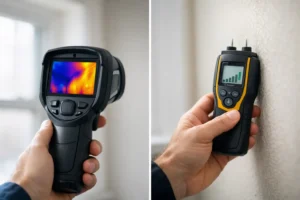
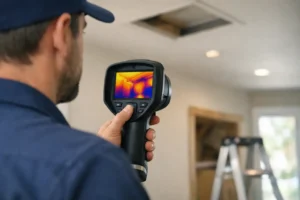
An infrared camera records surface temperatures as a visual image. Cooler and warmer areas appear in different colors or shades, allowing an inspector to recognize patterns that may be inconsistent with surrounding materials.
Those patterns can have several causes. A cool area below a window may be associated with air leakage, inadequate insulation, or moisture evaporation. An unusually warm electrical component may suggest elevated resistance or an overloaded condition. A temperature difference alone is not a diagnosis. The inspector must consider the location, weather, equipment operation, material properties, and supporting observations before reporting a concern.
That distinction matters. The value of thermal imaging is not a dramatic color image. It is the ability to investigate a potential issue with greater precision and document the findings in context.
7 Best Infrared Inspection Benefits for Property Decisions
1. It can identify moisture concerns before damage becomes obvious
Water often travels away from its entry point. By the time discoloration or soft finishes appear, the source may be difficult to locate. Moisture can create cooler surface patterns as it evaporates, helping direct further testing around roofs, plumbing fixtures, exterior openings, ceilings, and wall areas.
A thermal image should be confirmed with a moisture meter or other appropriate method. Still, narrowing the search area can save time and help buyers, owners, and managers address a developing issue before it affects more finishes or indoor conditions.
2. It can reveal insulation gaps and air-loss patterns
Comfort complaints are not always caused by an aging HVAC system. Missing, compressed, or uneven insulation, gaps around penetrations, and air movement at windows and doors can all contribute to uneven room temperatures and higher energy use.
Infrared imaging is especially useful when there is a meaningful temperature difference between indoors and outdoors. In a home, that may help explain why one bedroom is consistently colder. In a commercial building, it can help identify areas that deserve attention during energy upgrades or routine maintenance planning.
3. It adds another layer of electrical safety screening
Electrical components generate heat during normal operation, but concentrated or unusual heat may warrant prompt evaluation. Thermal imaging can assist in reviewing accessible panels, breakers, disconnects, outlets, and equipment connections for temperature irregularities.
The camera does not determine whether a circuit is safe on its own. Load conditions matter, and some concerns are only visible while equipment is operating. When a concerning pattern is observed, the report can document the location and recommend evaluation or repair by a qualified electrical professional. That gives the client a clear next step rather than an unsupported assumption.
4. It helps target further investigation without unnecessary disruption
Opening walls or removing finishes is not the first choice for most property owners. Infrared imaging is noninvasive, meaning it can help focus additional investigation on the areas most likely to need it.
For example, if a ceiling shows a distinct cool pattern near a plumbing fixture above, targeted moisture testing may help determine whether further access is justified. This does not eliminate the possibility of concealed conditions elsewhere, but it supports a more informed and efficient investigation process.
5. It improves documentation for negotiations and repair planning
A clear report should do more than state that a problem may exist. It should show where the concern was observed, describe why it matters, and explain what action is appropriate. High-resolution thermal images paired with standard photographs can make findings easier for buyers, sellers, contractors, property managers, and insurers to understand.
For transaction clients, that documentation can support repair requests or help prioritize due-diligence questions. For owners and managers, it can provide a useful record for budgeting, maintenance scheduling, and conversations with repair professionals.
6. It can support preventive maintenance in commercial properties
Commercial properties often contain more electrical equipment, larger roof areas, extensive HVAC systems, and many occupied spaces. Small issues can create operational disruptions when they are not identified early.
Thermal imaging may help a property team recognize patterns around accessible electrical equipment, areas of moisture intrusion, or thermal irregularities in the building enclosure. The benefit is not that every future failure can be predicted. It is that maintenance decisions can be based on observed evidence rather than waiting for a visible failure, occupant complaint, or service interruption.
7. It provides clearer context for high-stakes decisions
Whether the decision involves buying a home, evaluating an investment property, or planning a capital project, uncertainty has a cost. Infrared findings can provide useful context when paired with a full inspection and plain-language reporting.
Sometimes the result is reassuring: an area of concern may not show a temperature pattern consistent with active moisture at the time of inspection. Other times, the imaging may reveal a condition that justifies additional evaluation. Either outcome helps clients move forward with better information and a more realistic understanding of risk.
When Thermal Imaging Is Most Useful
Infrared inspections are most effective when conditions support meaningful temperature contrast. Heating or cooling systems may need to be operating, exterior weather can affect results, and sunlight can temporarily warm surfaces in ways that complicate interpretation. A skilled inspector accounts for these conditions rather than treating every color variation as a defect.
Access also matters. Furniture, stored contents, wall coverings, locked rooms, insulation placement, and inactive equipment can limit what can be observed. Thermal imaging evaluates accessible surface temperatures at a specific point in time. It cannot confirm every hidden condition, locate every leak, or replace specialized testing when more definitive evidence is needed.
For that reason, clients should view infrared imaging as part of a disciplined inspection process, not as a stand-alone guarantee. The strongest results come from combining technology with careful visual assessment, moisture verification, relevant operational testing, and reporting that distinguishes observations from recommendations.
What to Look for in an Infrared Inspection Report
A useful report connects the image to a practical decision. It should identify the location of the observed pattern, include standard photos when helpful, explain the likely concern without overstating certainty, and recommend an appropriate next step.
Avoid reports that rely on thermal images without explanation. A bright spot or dark area may look persuasive, but a color palette can be adjusted and surface temperatures can vary for ordinary reasons. What matters is the inspector’s interpretation, the supporting evidence, and the clarity of the recommendation.
Archer Professional Inspections uses advanced diagnostic methods to help clients identify conditions that deserve attention while keeping findings understandable and actionable. The goal is not to create alarm. It is to provide accurate documentation that supports sound property decisions.
When a property decision carries meaningful financial consequences, hidden conditions should not be left to guesswork. A carefully performed infrared inspection can turn a vague concern into a focused question, a documented finding, and a practical path forward.