A commercial property can look clean on a tour and still carry expensive problems that surface after closing. That is why the best commercial due diligence checks go far beyond a quick walk-through or a rent roll review. Buyers, lenders, and property managers need clear facts about condition, risk, deferred maintenance, and the practical cost of ownership.
Done well, due diligence is not about slowing a deal down. It is about making sure the numbers behind the deal reflect reality. A building may have solid occupancy and attractive pricing, but hidden moisture, aging mechanical systems, life-safety deficiencies, or site drainage issues can change the investment picture fast. The right checks help you negotiate from evidence, plan capital improvements, and avoid being surprised by issues that were visible before closing.
What the best commercial due diligence checks should accomplish
The best commercial due diligence checks answer three basic questions. What condition is the property in today? What is likely to require repair or replacement soon? And what risks could affect cost, operations, tenant satisfaction, financing, or insurance?
That sounds simple, but the right level of review depends on the asset and the transaction. A small retail strip center, a multi-tenant office building, an industrial facility, and a church or school do not present the same concerns. Some deals need a broad property condition review with budget forecasting. Others need more targeted investigation because a roof leak, settlement pattern, repeated water intrusion, or maintenance backlog is already suspected.
1. Property condition assessment
A thorough property condition assessment is usually the backbone of commercial due diligence. It documents the observed condition of major building systems and identifies deficiencies that matter to ownership, operations, and budgeting.
This review should cover roofing, exterior walls, windows, doors, pavement, drainage, interior finishes, plumbing, electrical, HVAC, and visible signs of water intrusion or deferred maintenance. The value is not just in spotting defects. It is in translating those findings into practical decision support. If several systems are at or near the end of their service life, the buyer needs that context before finalizing pricing or reserve assumptions.
For many investors, this is where a detailed report with photographs, organized findings, and repair priorities becomes essential. A good report helps non-technical stakeholders understand what they are buying without losing the detail that experienced professionals expect.
2. Roof and moisture evaluation
Few issues create post-closing frustration faster than roof failure and concealed moisture damage. A roof may appear acceptable from the ground while active leaks, trapped moisture, patched problem areas, or drainage defects tell a different story.
That is why roof review deserves special attention among the best commercial due diligence checks. The goal is not only to confirm whether the roof is leaking today. It is to understand age, wear patterns, repair history, drainage performance, and the likelihood of near-term replacement or significant repair.
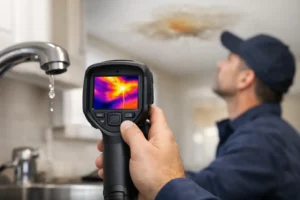
Moisture detection can also reveal problems inside wall assemblies, around penetrations, beneath finishes, or in areas where prior leaks were cosmetically covered. Thermal imaging and moisture tools can add useful evidence when conditions allow, especially in buildings with a history of leaks or staining.
3. HVAC system review
Commercial HVAC problems are expensive, disruptive, and sometimes easy to miss during a basic site visit. Units may be operating on inspection day but still show age-related wear, poor maintenance, inconsistent performance, or signs of limited remaining life.
A due diligence review should document the type, approximate age, visible condition, and general operation of heating and cooling equipment, along with obvious concerns such as damaged components, rust, disconnected controls, poor airflow, blocked access, or deferred service. In multi-tenant properties, it is also important to understand who serves what and whether tenant comfort complaints may already exist.
This is one of those areas where it depends. If the property has complex systems or mission-critical occupancy, a broader specialist review may be warranted. But even in more standard properties, a careful inspection often uncovers risks that should affect budgeting and negotiation.
4. Electrical system checks
Electrical issues matter for safety, reliability, insurance concerns, and future tenant needs. Older panels, overloaded circuits, exposed wiring, missing covers, improper modifications, and signs of overheating can all indicate a bigger maintenance story.
The best commercial due diligence checks include a practical review of service capacity, panel condition, distribution components, representative fixtures, and visible deficiencies. This is especially important in older buildings that have been repeatedly renovated for new tenants. Layered alterations can leave behind unsupported wiring, inconsistent labeling, abandoned components, and code-related concerns that may not be obvious during a leasing tour.
For buyers planning equipment-heavy occupancy or redevelopment, the question is not just whether the system works now. It is whether it supports the property’s intended use without immediate upgrade costs.
5. Plumbing and water intrusion review
Plumbing problems range from minor fixture leaks to hidden conditions that damage finishes, disrupt tenants, and increase operating expenses. Inspectors should look at supply and drain piping where visible, water heaters, representative fixtures, signs of prior leaks, staining, corrosion, and active moisture concerns.
Water intrusion is often broader than plumbing alone. Drainage at the site, roof runoff control, wall penetrations, failed sealants, and poor grading can all push water where it does not belong. When moisture patterns show up in ceilings, wall finishes, or flooring, buyers need to know whether they are seeing an old issue, an active one, or both.
6. Site and drainage inspection
A commercial building does not perform well if the site around it works against it. Standing water, poor grading, damaged sidewalks, failing pavement, trip hazards, and inadequate drainage can lead to tenant complaints, liability exposure, and gradual building damage.
This check is often undervalued because people focus on the building first. But site conditions affect accessibility, safety, maintenance cost, and water management. On retail, office, industrial, and institutional properties, parking lot condition and drainage performance can also carry immediate capital implications.
7. Life-safety and visible code-related concerns
Commercial due diligence is not the same as a full code compliance audit, but visible life-safety concerns should not be ignored. Missing or damaged egress components, blocked exits, faulty door hardware, inadequate emergency lighting, and similar issues can affect occupancy, insurance, and risk exposure.
This is where buyers benefit from clear reporting rather than vague alarm. The goal is to identify observed concerns, explain why they matter, and recommend the right next step when further review is appropriate. Serious findings may influence closing decisions, repair escrows, or early post-acquisition work.
8. Deferred maintenance and capital planning
One of the most useful commercial due diligence checks is also one of the most practical: identifying deferred maintenance and turning it into a realistic repair outlook. A property may be functional today while carrying years of postponed work.
That backlog matters because it affects true acquisition cost. Cosmetic wear is one thing. A long list of aging systems, patchwork repairs, damaged finishes, and neglected exterior components is another. Decision-makers need a report that helps separate routine upkeep from items likely to demand larger capital outlays in the short and medium term.
For many owners and investors, this is the section that bridges inspection findings with actual business planning.
9. Tenant-impact observations
For occupied properties, condition issues should be viewed through an operational lens. Are there visible signs that building deficiencies may affect comfort, access, safety, or tenant retention? Repeated ceiling stains, uneven temperatures, damaged common areas, or persistent drainage problems can become more than maintenance notes. They can turn into leasing and reputation issues.
This is especially relevant in multi-tenant properties where one hidden problem can affect several suites. Commercial due diligence should help the buyer understand not just the asset on paper, but how the property is likely to perform in day-to-day use.
10. Quality of documentation and reporting
The last item is easy to overlook, but it can shape the value of every other check. A rushed report with vague language and limited visual documentation leaves too much open to interpretation. A well-organized report with photographs, clear narratives, and prioritized recommendations gives buyers something they can actually use.
This matters during negotiations, financing discussions, maintenance planning, and post-closing handoff. It also matters when multiple stakeholders are involved and not everyone has seen the property in person. Archer Professional Inspections emphasizes this kind of decision-support reporting because the inspection is only as useful as the clarity of the final deliverable.
How to choose the right level of due diligence
Not every transaction needs the same scope. A newer single-tenant building with excellent maintenance records may call for a straightforward condition review. An older property with visible water damage, repeated repairs, or uncertain upkeep history may need a more detailed assessment with targeted follow-up.
The best approach is to match the inspection scope to the property type, age, occupancy, and risk tolerance of the deal. If your business plan depends on low immediate capital spend, you need more than a surface-level review. If you are already seeing warning signs during a showing, that is usually a reason to investigate further, not a reason to hope for the best.
Commercial real estate decisions are easier when the condition of the property is documented in plain language and backed by evidence. The right checks do not just help you avoid bad deals. They also help you move forward on good ones with a clearer budget, a better negotiating position, and fewer surprises after the papers are signed.