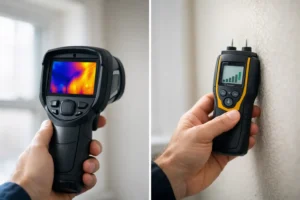
A ceiling stain that looks dry, a breaker panel that seems normal, a wall that feels just slightly cooler than the room – these are the kinds of details that can hide expensive problems. That is why many buyers, owners, and property managers ask, is thermal imaging worth it when scheduling an inspection?
In many cases, yes. Thermal imaging can reveal temperature differences that point to moisture intrusion, insulation gaps, air leakage, electrical hot spots, and HVAC performance concerns that may not be visible during a standard visual inspection alone. But it is not magic, and it is not a substitute for an experienced inspector who knows how to interpret what the camera is showing.
Is Thermal Imaging Worth It in a Property Inspection?
The short answer is that thermal imaging is often worth it when the goal is better visibility into hidden conditions. A thermal camera detects surface temperature patterns. Those patterns can help an inspector identify areas that deserve closer evaluation, especially behind finished surfaces where direct observation is limited.
For a homebuyer, that added visibility can reduce uncertainty before closing. For a seller, it can help identify issues before listing or negotiations. For a commercial client, it can support maintenance planning, risk management, and budgeting by locating developing concerns earlier.
The value is strongest when thermal imaging is used as part of a thorough inspection process, not as a stand-alone add-on with no context. A camera can show a temperature anomaly. It still takes training, moisture verification, building knowledge, and methodical reporting to explain what that anomaly may mean.
What Thermal Imaging Can Actually Reveal
Thermal imaging is useful because many building problems create heat patterns before they create obvious visible damage. That gives inspectors an advantage when evaluating areas that look fine at first glance.
Moisture intrusion and leaks
One of the most common reasons thermal imaging pays off is moisture detection. Water often changes the temperature of affected materials, which can create a visible pattern on a thermal image. That can help identify roof leaks, plumbing leaks, window penetration, or moisture migration in walls and ceilings.
Thermal imaging does not prove moisture by itself. A cooler area may be moisture-related, but it may also be caused by air movement or missing insulation. That is why a careful inspector confirms findings with other tools and on-site observations.
Insulation deficiencies and air leakage
In residential and commercial buildings, missing insulation and uncontrolled air leakage can raise utility costs and reduce comfort. Thermal imaging can help locate cold or warm spots around exterior walls, attic transitions, penetrations, doors, and windows.
This matters during both transactions and ownership. A buyer may want to know why a finished room feels uncomfortable. A property owner may be trying to understand why energy costs remain high despite equipment upgrades. Thermal imaging can help narrow down the cause.
Electrical concerns
Abnormal heat in electrical components can be a warning sign. Thermal imaging may help identify overheated breakers, wiring issues, loose connections, or overloaded circuits. In commercial environments especially, this can be valuable because electrical failures can interrupt operations and create safety concerns.
Again, context matters. Not every warm component is defective. Some temperature variation is normal under load. The real value comes from knowing what is expected, what is unusual, and what should be documented for further evaluation or repair.
HVAC performance patterns
Thermal imaging can also support evaluation of heating and cooling distribution. It may reveal uneven output, duct loss, blocked airflow, or areas where conditioned air is not reaching as intended. That does not replace HVAC testing, but it can provide useful clues when rooms are consistently too hot or too cold.
When Thermal Imaging Is Most Worth It
Not every property needs every available service. The strongest case for thermal imaging usually comes down to risk, access, and the age or complexity of the building.
Older properties often benefit because hidden wear, past repairs, and evolving building conditions can create issues that are not obvious on the surface. Buildings with a history of leaks, moisture stains, comfort complaints, or electrical concerns are also strong candidates. The same is true when a property has recently been renovated. Fresh finishes can improve appearance without necessarily correcting the underlying cause of a problem.
Thermal imaging is also worth stronger consideration when the financial stakes are high. For a buyer making a major purchase, a commercial investor assessing a building, or an owner trying to plan repairs intelligently, better information usually has real value. Even one confirmed hidden issue can justify the added cost.
When It May Not Add Much Value
There are situations where thermal imaging may have limited benefit. If conditions are not favorable, the camera may not produce meaningful patterns. For example, insulation assessments often depend on a sufficient temperature difference between inside and outside. If indoor and outdoor conditions are too similar, results may be less informative.
Access limitations can also reduce usefulness. If furnishings, stored materials, finished coverings, or operational constraints block critical areas, the camera can only assess exposed surfaces. In those cases, thermal imaging still may help, but expectations should be realistic.
It may also be less critical for a newer, well-documented property with no active symptoms, strong maintenance history, and a narrow inspection scope. Even then, some clients still choose it for added confidence. The question is not whether thermal imaging is always necessary. It is whether the likely insight justifies the cost for that decision.
What People Often Get Wrong About Thermal Imaging
A common misconception is that thermal cameras see through walls. They do not. They read surface temperatures. The image can suggest what may be happening behind a surface, but it does not provide X-ray vision.
Another misunderstanding is that a thermal image gives a final diagnosis. It does not. It shows a condition that needs interpretation. A dark area on a ceiling could indicate moisture, missing insulation, or air infiltration. Without experience and follow-up verification, it is easy to overstate or misread the result.
This is one reason the inspector matters as much as the tool. Thermal imaging is most useful in the hands of a professional who understands building performance, knows how environmental conditions affect readings, and documents findings clearly enough that clients can act on them.
Is Thermal Imaging Worth It for Homebuyers?
For many homebuyers, yes, especially when there are signs of prior water intrusion, inconsistent room temperatures, older electrical systems, or areas that are difficult to evaluate visually. A home purchase usually involves limited time and significant money. Hidden defects discovered after closing are far more expensive than preventive inspection costs.
Thermal imaging can help buyers ask better questions before they commit. It can also help separate cosmetic presentation from actual building performance. That does not mean every anomaly is a deal-breaker. It means the buyer has better information for negotiating, planning repairs, or deciding whether the risk is acceptable.
Is Thermal Imaging Worth It for Commercial Clients?
Commercial clients often see strong value because building systems are larger, occupancy demands are higher, and deferred issues can affect operations, tenant satisfaction, and long-term budgets. Thermal imaging can support due diligence, maintenance prioritization, and documentation of active concerns.
For property managers and investors, the benefit is often less about one isolated defect and more about decision support. If a thermal scan helps identify moisture migration, electrical heat anomalies, or insulation deficiencies early, it can prevent a minor issue from becoming a disruptive one.
For that reason, firms such as Archer Professional Inspections use thermal imaging as part of a broader inspection strategy focused on practical findings, clear reporting, and next-step recommendations rather than vague technical claims.
The Real Question Is Cost Versus Consequence
When clients ask whether thermal imaging is worth it, they are usually asking a more practical question: what is the cost of missing something hidden? That is the right question.
If thermal imaging adds a modest amount to an inspection but helps uncover concealed moisture, an overheating electrical component, or a widespread insulation problem, the return can be substantial. If conditions are poor for scanning or the property presents very low risk, the value may be smaller. That is why a credible inspection company should explain when the service is likely to help and when it may be optional.
The best use of thermal imaging is not to create drama. It is to reduce blind spots. When used by a qualified inspector and paired with careful interpretation, it can turn subtle warning signs into useful evidence. And when you are making a property decision that affects safety, maintenance, and money, better evidence is often worth paying for.
If you are considering thermal imaging, the smartest move is to ask not just what the camera can do, but how the findings will be verified, documented, and translated into next steps you can actually use.