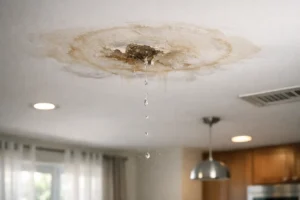
A building leak that keeps returning. Floor cracks that seem to widen every season. Wall staining after a storm, even though the roof was “fixed” last year. These are the moments when people start asking what is forensic engineering in construction, because ordinary maintenance advice is no longer enough. When the cause of a problem is disputed, hidden, or expensive, a forensic investigation helps turn symptoms into documented facts.
What is forensic engineering in construction?
Forensic engineering in construction is the process of investigating building failures, damage, defects, or performance problems to determine what happened, why it happened, and what should happen next. The work is evidence-based. It looks beyond surface symptoms and focuses on causation, contributing conditions, extent of impact, and practical implications for repair, liability, insurance, or future risk.
In plain terms, it is not just about identifying that a building has a problem. It is about tracing that problem back to its source. That source could be water intrusion, poor installation, material deterioration, movement, deferred maintenance, storm damage, code-related concerns, or a combination of factors. In many cases, more than one issue is involved, which is why these investigations require careful documentation and disciplined analysis.
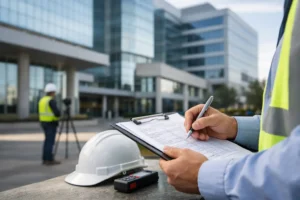
Construction forensic work often becomes necessary when the stakes are high. A homeowner may need answers before making a major repair. A commercial buyer may want confirmation before closing on a property with visible distress. An owner, insurer, attorney, or property manager may need objective findings supported by photographs, moisture readings, thermal imaging, field observations, and a clearly written report.
When forensic engineering is used in construction
Most building issues do not start as legal or insurance matters. They start as unanswered questions. Why is this happening? Is it new or long-term? Is it cosmetic, or does it point to a deeper condition? Can it be repaired locally, or is a wider correction needed?
That is where forensic engineering in construction becomes valuable. It is commonly used after storms, fires, vehicle impacts, water damage events, repeated leaks, foundation movement symptoms, material failures, construction disputes, and premature deterioration. It is also useful when repairs have already been attempted but the problem continues.
For residential owners, this kind of investigation can provide clarity before spending thousands on trial-and-error repairs. For commercial stakeholders, it supports budgeting, vendor accountability, acquisition decisions, reserve planning, and claim documentation. The benefit is not just technical accuracy. It is decision support.
What a forensic investigation actually looks at
A proper forensic evaluation does not begin with assumptions. It begins with conditions on site, the building’s history, and the available evidence.
The investigator reviews visible damage patterns, moisture paths, material condition, installation details, and how different building components interact. They may compare interior and exterior conditions, inspect attic or roof areas, review drainage and grading, examine cladding transitions, or evaluate signs of recurring movement or chronic wetting. The goal is to connect the dots between observed conditions and the likely cause.
Tools matter here, but tools do not replace judgment. Moisture meters help confirm active or past moisture intrusion. Thermal imaging can reveal temperature differences that suggest concealed moisture or missing insulation. High-resolution photography preserves conditions at the time of inspection. Measurements, field notes, and defect mapping help establish whether a problem is isolated or part of a larger pattern.
In some cases, the findings are straightforward. A failed flashing detail allows water entry at a window perimeter. In other cases, the answer is layered. A roof leak may involve aging materials, poor drainage, and earlier patchwork that redirected water rather than stopping it. Good forensic work accounts for those nuances instead of forcing a simple answer where none exists.
What forensic engineering in construction is not
It helps to separate forensic work from a standard property inspection. A routine inspection is broad. It gives buyers, sellers, or owners a practical overview of the property’s condition at the time of the visit. It identifies visible concerns, maintenance items, and general performance issues.
Forensic engineering in construction is narrower and deeper. It is designed to investigate a specific failure, defect, or pattern of damage. The reporting is typically more focused on cause, extent, documentation, and recommended next steps. That may include repair guidance, further invasive evaluation, monitoring, or support for an insurance or legal process.
It is also different from a contractor estimate. A contractor may suggest how to fix a problem, but that does not always establish why the problem developed in the first place. If the cause is misunderstood, the repair may be incomplete or misdirected. That is one reason owners sometimes pay for the same issue twice.
Why causation matters so much
Causation is the center of forensic work. If a building component fails, the next decision depends on why it failed. Was it storm-related damage, long-term wear, poor workmanship, material incompatibility, deferred maintenance, or a concealed moisture issue that spread over time? Each answer leads to a different repair strategy and different financial consequences.
This is where many disputes arise. One party may say the issue is recent storm damage. Another may say it is old and unrelated. One contractor may blame a product. Another may blame installation conditions. Without a documented investigation, the owner is left sorting through opinions.
A careful forensic report reduces that uncertainty. It does not guarantee that every party will agree, but it creates a factual basis for the conversation. That is valuable whether the next step is repair planning, a claim, litigation support, reserve budgeting, or simply understanding what needs immediate attention.
The role of documentation
In construction-related forensic work, documentation is not an accessory. It is the product.
Anyone can point at a stain and say there is water damage. Useful reporting goes further. It records where the damage appears, how extensive it is, what surrounding conditions suggest about the source, what tools were used to evaluate it, and what limitations affected the inspection. It distinguishes observed facts from professional conclusions.
That level of detail matters because building conditions change. Leaks dry out. Cracks widen. Repairs cover over evidence. Occupants move furniture. If a dispute, claim, or project decision depends on the condition of a property at a certain point in time, organized documentation can make the difference between clarity and confusion.
For that reason, clients should expect reports that are thorough but readable. The best forensic reporting translates technical findings into plain language without losing precision. Archer Professional Inspections follows that standard because clients need more than data. They need clear answers they can act on.
Who benefits from forensic engineering in construction?
Homeowners benefit when a recurring issue has become too costly to guess at. Buyers benefit when visible distress could affect negotiations or future repairs. Sellers benefit when they want credible documentation to address concerns before listing or closing.
Commercial owners, investors, and property managers often have even more to gain. A single unresolved building issue can affect tenant satisfaction, maintenance budgets, insurance discussions, capital planning, and transaction timelines. In those settings, the value of forensic work is not just technical. It is operational and financial.
There is, however, an important trade-off. Forensic investigations are targeted, which means they should be scoped carefully. Not every crack or stain needs a full forensic report. Sometimes a conventional inspection or repair consultation is enough. The right level of service depends on the severity of the issue, the amount of uncertainty, and what decision the client needs to make.
What to expect from the process
A sound forensic engagement usually starts with a conversation about the problem history, timeline, prior repairs, and current concerns. From there, the inspection is tailored to the issue rather than treated as a generic walkthrough.
After the site visit, the findings are organized into a report that explains observed conditions, likely causes, contributing factors, and recommended next steps. Depending on the assignment, that next step may be repair by a qualified contractor, additional testing, selective opening of concealed areas, monitoring over time, or documentation for an insurer or attorney.
The strongest outcome is not a dramatic conclusion. It is a clear path forward. Sometimes the answer confirms a limited repair. Sometimes it reveals a broader building envelope issue. Sometimes it shows that a feared major failure is actually localized and manageable. Accurate scope is what saves clients from overreacting or underreacting.
When a building problem is expensive, persistent, or disputed, good decisions start with reliable facts. That is the real value behind asking what is forensic engineering in construction. It is a disciplined way to replace assumptions with evidence so the next repair, claim, or property decision is based on what the building is actually telling you.