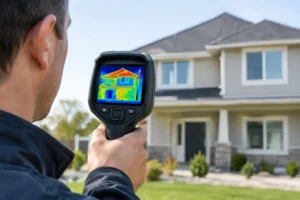
A fresh coat of paint, clean flooring, and a tidy utility room can make a property feel well cared for. They can also make it easier to miss conditions developing behind walls, above ceilings, beneath finishes, or around major systems. The best signs of hidden property damage are often small at first: a faint stain, an unusual odor, a door that no longer closes cleanly, or a utility bill that has changed without an obvious reason.
For buyers, these clues can affect negotiations and repair planning. For owners and commercial decision-makers, they can reveal maintenance needs before a manageable repair becomes a disruptive expense. The key is knowing what deserves a closer look and when professional documentation is the right next step.
Best Signs of Hidden Property Damage to Watch For
1. Stains, bubbling paint, or peeling finishes
Water does not always announce itself with an active drip. A yellow-brown ceiling stain, bubbling wall paint, loose wallpaper, or peeling trim may point to a roof leak, plumbing leak, window issue, or condensation problem. Even if the area feels dry during a walkthrough, the source may be intermittent and tied to rain, appliance use, or temperature changes.
Pay attention to the stain’s location. A mark below a bathroom may suggest plumbing or fixture leakage, while staining near an exterior wall may be connected to water intrusion from the roof, siding, windows, or gutters. Painting over the evidence may improve appearance, but it does not identify or correct the cause.
2. Musty odors or persistently damp areas
A musty smell is not proof of a major issue, but it should not be dismissed as an old-house smell. Odors can develop when moisture remains in enclosed spaces such as basements, crawlspaces, closets, wall cavities, and beneath flooring. Excess humidity may also contribute to surface growth, deteriorated finishes, and poor indoor conditions.
Look for patterns. Does the odor become stronger after rain? Is it concentrated near a utility room, below-grade area, bathroom, or exterior wall? A thorough evaluation can combine visible observations with moisture detection and thermal imaging to help determine whether moisture is active, historical, or likely coming from another source.
3. Flooring that feels soft, uneven, or newly covered
Flooring can hide a great deal. Soft spots, separated planks, loose tile, cupping wood, cracked grout, or flooring that slopes noticeably may indicate moisture exposure, movement, installation problems, or deterioration below the finished surface. New flooring deserves attention when it appears only in one room or abruptly changes at a doorway. It may be an ordinary update, but it can also conceal prior water damage or a condition that has not been fully addressed.
Ask when the flooring was installed and why. In a commercial property, examine high-traffic areas, restrooms, kitchens, entry points, and locations near mechanical equipment. These areas are more likely to experience repeated moisture exposure and wear.
4. Doors and windows that stick, separate, or no longer align
A door that rubs the floor or a window that is difficult to operate can result from seasonal humidity or routine settling. It becomes more concerning when several openings in the same area are affected, cracks appear nearby, or gaps develop around frames and trim.
These symptoms may reflect movement, moisture-related swelling, poor installation, or changes in the building over time. One sticking interior door may be minor. Multiple misaligned doors, especially when paired with wall cracking or uneven floors, warrant closer investigation before a purchase or major renovation.
5. Cracks that change in location, size, or pattern
Not every crack is serious. Small, stable cracks in drywall or concrete are common. What matters is the pattern and whether it appears to be changing. Diagonal cracks extending from window or door corners, widening gaps, recurring cracks after repair, or cracks accompanied by water entry should be documented and evaluated.
Exterior masonry, concrete, and interior finishes can each provide useful clues. A careful inspection considers the full picture rather than relying on one crack alone. Age, materials, drainage, site conditions, and visible movement all affect what a finding may mean.
6. Rust, corrosion, or unusual moisture around equipment
Water heaters, HVAC equipment, electrical panels, plumbing connections, and other building systems often reveal early warning signs before a failure occurs. Rust at connections, corrosion on piping, mineral deposits, drip marks, or a pan with standing water can indicate a current or previous leak.
Electrical concerns deserve particular care. Flickering lights, warm outlets, frequently tripped breakers, buzzing sounds, or improvised wiring should never be treated as cosmetic issues. These conditions may create safety concerns and can be expensive to correct if they are widespread. An inspection report should clearly distinguish observed conditions, likely implications, and appropriate next steps.
7. A roofline, attic, or ceiling that tells a different story
Roof problems are not always visible from the ground. In attics and upper-level spaces, look for daylight at penetrations, damp insulation, staining on sheathing, rusted fasteners, mold-like surface growth, or evidence of past patching. On ceilings, repeated staining near exterior walls or around vents can indicate a leak path that has not been resolved.
Age matters, but condition matters more. A newer roof can still have flashing, drainage, or installation issues. An older roof may remain serviceable if it has been maintained. The practical question is whether evidence suggests active water entry, deferred repairs, or a need for budget planning.
8. Poor drainage and water collecting near the building
Water should move away from the property, not collect beside it. Clogged gutters, short downspout extensions, low areas near the foundation, eroded soil, and standing water after rain can increase the likelihood of moisture entering lower-level spaces.
This is one of the most useful observations because it connects exterior maintenance to interior symptoms. A damp basement corner, peeling paint, or persistent odor may be related to drainage conditions outside. Correcting the water path can be as important as repairing the visible damage inside.
9. Unexplained changes in utility use or system performance
A sudden increase in water consumption can point to a concealed plumbing leak. Rising energy use may relate to insulation gaps, air leakage, aging equipment, duct issues, or moisture affecting building materials. These changes are not diagnostic by themselves, but they provide a reason to investigate.
Compare current bills with the same season in prior years when possible. In larger properties, review maintenance records, occupant complaints, and recurring work orders. Trends often reveal a problem that a single walkthrough cannot.
10. Repairs that look isolated, rushed, or inconsistent
A patch is not automatically a red flag. Responsible owners repair properties all the time. However, fresh paint on a small portion of a ceiling, mismatched drywall texture, newly installed trim around one window, or a recently boxed-in pipe may deserve questions.
The goal is not to assume the worst. It is to understand what was repaired, why it was repaired, whether the source was corrected, and whether documentation is available. Clear answers, invoices, photographs, and repair records reduce uncertainty. Vague explanations increase the value of an independent assessment.
When Visual Clues Are Not Enough
Many hidden conditions cannot be confirmed by sight alone. Moisture meters can help identify elevated moisture in accessible materials. Thermal imaging may reveal temperature differences consistent with moisture, missing insulation, or air leakage. These tools are most useful when paired with trained interpretation, because a temperature difference is a clue, not a final diagnosis.
For a home purchase, a detailed inspection can help separate routine maintenance from conditions that require specialist review, repair estimates, or further testing. For commercial acquisitions and property portfolios, a property condition assessment provides documented findings that support capital planning, negotiations, and risk management.
Archer Professional Inspections approaches these decisions with high-resolution documentation, practical explanations, and actionable recommendations. The purpose is not to create alarm. It is to give clients a clear, evidence-based understanding of what was observed and what deserves attention.
A property rarely waits for the perfect time to reveal a concealed problem. When a small clue appears, document it, ask direct questions, and get qualified insight before making a repair, signing an agreement, or accepting uncertainty as part of the deal.