A water stain on a ceiling, cracked masonry, a sagging floor, or a storm-damaged roof can look like a straightforward repair issue. It may not be. A property damage investigation is the process of determining what happened, where the damage began, how far it extends, and what evidence supports that conclusion. Those answers can affect an insurance claim, a repair scope, a real estate transaction, or a dispute over responsibility.
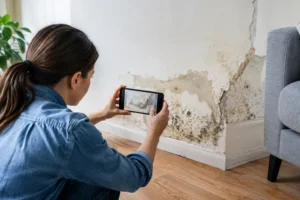
The difference between observing damage and investigating it is evidence. An observation says a wall is discolored. An investigation asks whether the discoloration came from an active plumbing leak, roof intrusion, condensation, a past event, or another source entirely. Repairing visible symptoms without understanding the cause can leave a property owner paying twice.
What a Property Damage Investigation Is Designed to Answer
A focused investigation should provide decision-ready answers, not just a collection of photographs. The central questions are usually straightforward: What is damaged? What caused it? Is the condition active or historical? How extensive is the impact? What repairs or additional evaluation should occur next?
The answer to each question depends on the property, the type of loss, the timing of the event, and the available documentation. A wind event may leave visible exterior damage while also creating concealed moisture concerns. A plumbing failure may affect finishes in several rooms but have a single source. Cracks in finishes may be cosmetic, related to normal building movement, or associated with a condition requiring further attention. Context matters.
A thorough report separates confirmed findings from reasonable observations and recommendations. That distinction is especially valuable when owners, insurers, contractors, buyers, or attorneys need to rely on the documentation later.
Why the Cause Matters as Much as the Damage
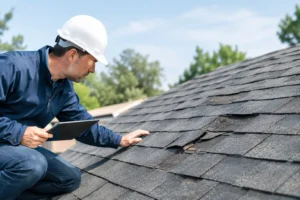
Visible damage alone rarely tells the full story. Water can travel along framing, piping, insulation, or floor assemblies before it becomes visible. Wind can affect roof coverings in ways that are difficult to identify from the ground. Fire and smoke can create conditions that extend beyond the room where the incident occurred. Settlement-related cracking can be mistaken for damage from a recent event when the condition developed over time.
Identifying the cause helps prevent two costly errors: repairing the wrong area and assigning the wrong responsibility. For example, replacing stained drywall may improve appearance, but it does not resolve an active moisture source. Similarly, a damaged exterior component may be related to age and wear, a sudden event, installation deficiencies, deferred maintenance, or a combination of factors.
An investigator should avoid forcing a conclusion where the evidence does not support one. In some cases, the proper finding is that additional testing, monitoring, or a specialty contractor’s evaluation is needed. Clear limits are a sign of careful work, not uncertainty.
Evidence That Builds a Reliable Damage Assessment
The strongest property damage investigation combines visual conditions, diagnostic findings, measurements, records, and a reasoned explanation of how those pieces fit together. No single photograph or reading should carry the entire conclusion.
Visual Documentation and Site Conditions
High-resolution photographs establish the condition of the property on the day of the inspection. Wide shots show location and context. Closer images document material damage, staining patterns, cracks, displaced components, and other relevant details. Good documentation also records unaffected areas when they help define the apparent limits of the condition.
Site observations matter as well. Drainage patterns, roof details, nearby trees, exterior penetrations, plumbing locations, and changes in materials can all help explain why damage appeared where it did. In commercial properties, rooftop equipment, wall penetrations, and maintenance history may be particularly relevant.
Moisture Detection and Thermal Imaging
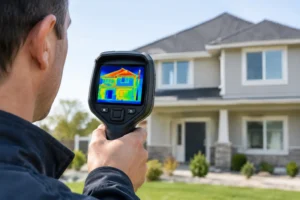
Moisture meters can help identify elevated moisture levels in accessible materials. Thermal imaging may reveal temperature differences that point to potential moisture, air movement, missing insulation, or electrical concerns. These tools are valuable because they can identify areas that warrant closer examination without unnecessary demolition.
They also have limits. A thermal image does not identify moisture by itself, and a moisture reading must be interpreted based on the material being tested and surrounding conditions. Professional reporting should explain what the tool found, what that finding may indicate, and what cannot be confirmed without further access or testing.
Measurements, Patterns, and Timing
Damage patterns often tell a story. The direction of displaced roofing material, the location of a water stain below a roof penetration, or the repeated appearance of cracks near an opening can provide useful clues. Measurements help make the report more precise, especially when documenting crack width, moisture levels, floor variation, or the extent of affected finishes.
Timing is equally important. Owners should preserve photos taken before and after an event, repair invoices, maintenance records, claim correspondence, and contractor proposals. A property inspection conducted soon after a loss may capture conditions that are later altered during cleanup or repair. If an inspection occurs months later, the report should account for changed conditions and the evidence still available.
A Practical Investigation Process
The process begins with a clear scope. The client should explain the reported event, when it occurred, the areas of concern, repairs already completed, and the decision the report needs to support. A buyer evaluating a property after a disclosed water issue needs a different scope than an owner documenting storm damage for an insurance claim.
During the site visit, the inspector evaluates accessible areas connected to the reported condition rather than focusing only on the most obvious symptom. That may include exterior surfaces, attic spaces, interior finishes, plumbing-adjacent areas, roof components, ceilings, floors, and mechanical spaces. The goal is to trace evidence logically from the suspected source to the observed impact.
After the field work, the report should organize findings in plain language. It should identify observed conditions, include labeled visual documentation, explain the likely cause when supported, note limitations, and recommend practical next steps. For complex matters, a timely report is especially important because it gives decision-makers a reliable record while conditions are still fresh.
When an Investigation Is Worth Scheduling
Not every minor defect requires a formal investigation. A small, isolated issue with an obvious cause may only need a qualified repair professional. The value of an investigation rises when the condition is concealed, recurring, widespread, disputed, or connected to a significant financial decision.
Consider professional documentation when damage follows a storm, plumbing leak, fire, impact, or suspected construction defect. It is also useful when a buyer discovers concerning conditions during due diligence, when a commercial owner needs to plan repairs across multiple building areas, or when an insurer or contractor reaches a conclusion that does not match the visible evidence.
For property managers and commercial owners, investigations can also support maintenance planning. Identifying an active source early may limit operational disruption and help prioritize repairs based on risk rather than appearance alone.
Common Mistakes That Complicate Damage Claims and Repairs
The first mistake is making permanent repairs before the original condition is documented. Emergency measures to protect the property are often necessary, but owners should photograph conditions and retain damaged materials when safe and practical. Once materials are removed, important evidence may be lost.
Another mistake is assuming that the visible boundary is the full boundary. A ceiling stain may represent a small, resolved issue or a larger concealed moisture path. Testing accessible adjacent areas can help establish whether the condition is isolated.
Finally, avoid relying on vague repair language. A proposal that says “repair water damage” does not explain the source, the affected areas, or whether the source has been corrected. Better documentation helps owners compare repair recommendations and ask more informed questions.
Documentation That Supports Better Decisions
A useful investigation report does more than identify problems. It creates a record that allows different parties to understand the same facts. The owner can use it to prioritize repairs. A buyer can use it to assess risk. A property manager can use it to plan work. An insurer or legal representative can review documented site conditions rather than relying on memory or broad descriptions.
Archer Professional Inspections approaches damage-related evaluations with that practical purpose in mind: careful on-site assessment, clear visual evidence, and reporting that explains what the findings mean for the next decision.
When property damage raises questions that a quick visual review cannot answer, the most useful next step is to document conditions before they change. Good evidence does not eliminate every uncertainty, but it gives you a clearer basis for protecting the property and moving forward with confidence.