A dark stain on a ceiling is easy to recognize. The early stages of a roof leak, plumbing leak, or insulation gap are not. An infrared home inspection review can help reveal temperature differences that point an inspector toward hidden conditions before they become expensive surprises. For buyers, sellers, homeowners, and commercial decision-makers, that added visibility can bring useful clarity to a major property decision.
Thermal imaging is not a shortcut or a stand-alone diagnosis. It is a diagnostic tool that works best in the hands of a trained inspector who understands building systems, moisture behavior, electrical patterns, and the limits of the equipment. The value is not simply receiving a colorful image. The value is receiving clear, evidence-based findings that explain what was observed, what may be causing it, and what should happen next.
What an Infrared Home Inspection Review Can Show
An infrared camera measures surface temperatures. It does not see through walls, floors, or ceilings, and it does not directly measure moisture. Instead, it displays variations in surface temperature as a thermal image. Those variations can help identify areas that deserve closer evaluation.
For example, a cooler area below a bathroom supply line may indicate moisture evaporating behind a wall. A warm electrical connection may suggest increased resistance at a breaker, outlet, or panel component. A pattern of uneven temperatures along an exterior wall may point to missing, compressed, or poorly installed insulation.
During an infrared home inspection review, the inspector compares the thermal pattern with visible conditions, moisture meter readings where appropriate, system operation, and the property’s recent weather or occupancy conditions. This verification matters. A cool patch can be related to moisture, but it may also result from air movement, a shaded exterior surface, a recently opened door, or a material change behind the finish.
Where Thermal Imaging Adds the Most Value
Thermal imaging is particularly useful when it helps direct attention to conditions that may otherwise remain concealed during a visual inspection. It can support a more thorough assessment of several common risk areas.
Moisture Intrusion and Active Leaks
Moisture is one of the most costly conditions to overlook. A leak can begin behind a finished ceiling, beneath a sink cabinet, around a window, or near a roof penetration with little visible evidence. Temperature differences may identify a suspect area early enough for targeted confirmation.
An inspector may use a moisture meter, visual review, and accessible plumbing evaluation to determine whether the pattern is consistent with active moisture. If confirmation is not possible during the inspection, the report should state that clearly and recommend the right type of follow-up rather than presenting an assumption as fact.
Insulation and Air Loss
Heating and cooling costs are not always caused by an aging HVAC unit. Uneven insulation, gaps around attic access points, unsealed penetrations, and air leakage around windows or exterior doors can affect comfort and energy performance.
Thermal imaging can be especially informative when there is a meaningful temperature difference between indoors and outdoors. In winter, areas of heat loss may appear warmer on an exterior scan or cooler from inside the home. In summer, the pattern can reverse. Conditions at the time of inspection influence what can be observed, which is why a careful report explains the inspection environment as well as the findings.
Electrical Concerns
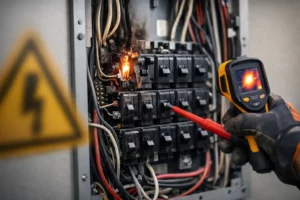
Electrical components can generate excess heat when a connection is loose, a circuit is overloaded, or a component is deteriorating. An infrared scan may identify unusual heat at accessible electrical panels, breakers, outlets, or equipment while systems are operating.
Not every warm electrical component is defective. Some equipment naturally operates at a higher temperature, and thermal readings need context. Still, a confirmed abnormal pattern may warrant evaluation by a qualified electrical contractor before it develops into a safety issue or equipment failure.
Roof and Exterior Conditions
When conditions are favorable, thermal imaging can help identify temperature anomalies associated with moisture in roof coverings, wall assemblies, or ceiling areas below the roofline. It can also help locate areas where insulation is absent or where conditioned air is escaping.
Results depend heavily on sun exposure, recent rainfall, roof material, access, and the time of day. A thermal camera cannot replace a close visual roof evaluation, nor can it guarantee that a roof is leak-free. It provides another layer of evidence when used alongside a complete inspection process.
What Thermal Imaging Cannot Tell You
A professional inspection should be precise about limitations. An infrared camera cannot identify every hidden defect, predict future leaks, or confirm the exact source of every temperature variation. It also cannot inspect areas blocked by furnishings, stored items, wall coverings, or inaccessible assemblies.
Thermal results are affected by weather, indoor temperature settings, HVAC operation, surface reflectivity, and recent use of water or appliances. A hot spot on a polished surface, for instance, may be a reflection rather than heat from the material itself. Skilled interpretation separates meaningful patterns from misleading images.
This is why an inspection report should not treat thermal images as dramatic standalone proof. The strongest reports pair images with a plain-language explanation of the observed condition, the location, the likely significance, any verification performed, and a practical recommendation.
What a Useful Inspection Report Should Include
A good infrared home inspection review should make the information usable after the inspection is over. Buyers may need it for repair negotiations. Sellers may use it to plan repairs before listing. Property owners and managers may rely on it to prioritize maintenance or document conditions for insurance and other decision-making needs.
Look for reporting that includes high-resolution visual and thermal images when relevant, clear location details, and recommendations scaled to the issue. A minor insulation irregularity should not be presented with the same urgency as suspected active moisture or an electrical heat concern.
The report should also distinguish between an observed condition and a recommendation for further evaluation. That distinction protects the client from vague language while avoiding false certainty. A finding such as, “Elevated moisture readings were confirmed at the lower wall area adjacent to the shower supply plumbing,” is more useful than a generic note that “possible moisture may be present.”
At Archer Professional Inspections, thermal imaging is used as part of a thorough inspection process, not as an add-on designed to create alarm. The goal is to identify concerns that matter, document them carefully, and provide practical next steps within a clear, decision-support report.
Is Infrared Imaging Worth Including?
For many properties, the answer is yes, particularly when the inspection involves an older home, a property with a history of leaks, a building with uneven room temperatures, or a purchase where concealed conditions could affect negotiations. It can also be valuable for commercial properties where moisture, roof performance, electrical equipment, and building-envelope issues may have larger operational consequences.
However, the benefit depends on how the tool is used. A camera alone does not create a better inspection. Training, methodical verification, accessible conditions, and accurate reporting do. Ask whether infrared imaging is included in the inspection scope, how suspicious patterns are confirmed, and how findings will be documented.
The right inspection should leave you with more than images. It should give you a clearer understanding of the property, a defensible record of observed conditions, and sensible priorities for what deserves attention next.