A leaking roof, aging electrical panel, or moisture-damaged wall can change a property decision quickly. The difference between residential vs commercial inspections is not simply the size of the building. It is the level of risk, the systems involved, the intended use of the report, and the decisions the findings need to support.
For a homebuyer, an inspection often helps answer one immediate question: What condition is this house in before I commit? For an investor, property manager, lender, or business owner, the questions are usually broader. What repairs are needed now? What capital costs may be approaching? Could an unresolved condition affect operations, tenant safety, insurance, or a transaction timeline?
Both inspection types require careful observation and clear documentation. However, the right approach depends on the property and the purpose behind the inspection.
Residential vs Commercial Inspections: The Core Difference
A residential inspection focuses on a home and the major visible, accessible components that affect its condition, safety, and function. The inspection commonly reviews the roof, exterior, interior, heating and cooling equipment, plumbing, electrical systems, attic, insulation, and readily accessible areas. The report gives buyers, sellers, and homeowners a practical picture of defects, maintenance needs, and conditions that warrant further evaluation.
Commercial inspections examine buildings used for business, investment, institutional, or mixed-use purposes. These properties may include office buildings, retail centers, warehouses, apartment communities, medical facilities, restaurants, industrial spaces, and other specialized occupancies. Their systems are often larger, more interconnected, and more consequential if they fail.
The central distinction is decision context. A residential report is usually tied to a purchase, sale, maintenance concern, or repair negotiation. A commercial assessment may support due diligence, property condition reporting, reserve planning, portfolio management, lease discussions, insurance claims, or litigation-related documentation. That broader role requires a report that can be understood by several stakeholders, each with different priorities.
Scope Changes With Building Complexity
A modest single-family home and a multi-tenant commercial facility may both have roofing, electrical service, plumbing, and HVAC equipment. Yet the inspection process changes substantially when a property serves dozens of occupants, contains specialized equipment, or must remain operational during repairs.
What a residential inspection typically addresses
Residential inspections are designed to identify material visible conditions and maintenance concerns in a home. A thorough inspector looks for signs of water intrusion, roof wear, unsafe electrical conditions, plumbing leaks, deteriorated exterior finishes, poor drainage, appliance concerns, and performance issues with heating or cooling equipment.
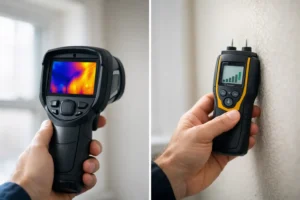
The goal is not to create a repair checklist for every minor cosmetic item. It is to help the client understand what is functioning as expected, what needs attention, and what could become costly if ignored. Thermal imaging and moisture detection can add useful evidence when there are signs of concealed leaks, insulation gaps, or temperature irregularities.
A buyer may use the report to negotiate repairs or pricing. A seller may use it to address known issues before listing. A homeowner may use it as a maintenance roadmap, particularly after a severe storm, before a renovation, or when recurring problems have no obvious source.
What a commercial inspection may require
Commercial properties often require a more tailored scope. The inspection may consider roof areas across a large footprint, exterior walls, paving, drainage, loading areas, common spaces, mechanical rooms, electrical distribution, fire and life-safety features, plumbing systems, elevators, site conditions, and accessible tenant spaces.
The exact scope depends on the asset type and client objective. A warehouse may require close attention to roof condition, loading docks, overhead doors, floor wear, lighting, and site drainage. A multifamily property may require representative unit observations alongside common-area and building-system review. A medical or food-service facility can involve specialized equipment and operational considerations that do not exist in a typical home inspection.
Commercial work also requires clear limits. Inspectors need to establish which areas are accessible, whether tenant spaces will be available, what records are provided, and whether specialized consultants are needed. A careful assessment does not assume that every concern can be confirmed through visual observation alone. When conditions indicate a need for further investigation, the report should say so directly and explain why.
Reporting Must Support the Next Decision
The best inspection report does more than describe defects. It organizes evidence so the client can make a decision without guessing what matters most.
For residential clients, this usually means a readable report with high-resolution photos, clear descriptions, and practical recommendations. Technical language has a place, but the conclusion should be understandable to a buyer deciding whether to move forward, request repairs, or budget for improvements after closing. Fast delivery matters because inspection periods can be short and negotiations move quickly.
Commercial reporting often needs to distinguish between immediate concerns, near-term repairs, deferred maintenance, and longer-range capital planning. A property owner may need to know not only that a roof has reached the end of its expected service life, but also how that condition could affect budgets, tenant operations, and acquisition assumptions.
A useful commercial property condition report puts findings in context. It identifies observed deficiencies, documents their location and apparent severity, and provides actionable recommendations. Depending on the assignment, it may also include anticipated repair timing and cost opinions. The level of detail should match the client’s use case. An investor acquiring one building needs something different from a national organization reviewing multiple facilities.
Timing and Access Can Affect the Results
Residential inspections are often scheduled around a real estate contract. The home may be vacant, occupied by the seller, or newly constructed. The inspector generally has a defined period to complete the site visit and provide findings, allowing the client to act quickly.
Commercial inspections can involve more coordination. Access may need to be arranged with property managers, tenants, maintenance personnel, security teams, or facility operators. Certain areas may be unavailable during business hours. Roof access may require safety procedures. Mechanical rooms, electrical rooms, and restricted spaces may need escorts or separate scheduling.
That does not mean commercial inspections must be slow. It means planning matters. A clear pre-inspection scope, available documents, site access plan, and understanding of operational constraints can improve efficiency while reducing gaps in the assessment.
The Limits of Both Inspection Types
No visual inspection can eliminate every risk. Concealed defects, inaccessible spaces, underground utilities, intermittent equipment failures, and conditions hidden behind finishes may not be visible during the site visit. An inspection is also not a guarantee that no future repair will be needed.
The value comes from reducing uncertainty with professional observation, diagnostic tools when appropriate, and disciplined reporting. A well-documented finding gives the client a basis to request more information, obtain repair estimates, adjust a budget, or bring in the right specialist before a manageable issue becomes a larger expense.
This is also why the lowest-priced inspection is not always the best value. A report that lacks photos, omits key areas, uses vague language, or arrives too late to support a decision can cost far more than the inspection fee saved.
Choosing the Right Inspection for Your Property
Start with the property type, then consider the decision you need to make. A home purchase, pre-listing review, annual maintenance check, and post-storm concern are residential scenarios that benefit from a comprehensive home inspection. An acquisition, refinancing, lease decision, portfolio review, recurring building issue, or insurance matter may require a commercial assessment or a more specialized investigation.
Be prepared to explain your objective before scheduling. Share the age and use of the property, known concerns, transaction deadlines, available records, and whether the building will be occupied during the inspection. Those details help define a scope that is thorough without being unnecessarily broad.
Archer Professional Inspections approaches both residential and commercial assignments with the same standard: accurate on-site evaluation, visual evidence, and reporting that makes the next step clearer. The right inspection should not leave you with a stack of technical observations and no direction. It should give you a practical view of the property, the risks worth addressing, and the confidence to make a well-supported decision.