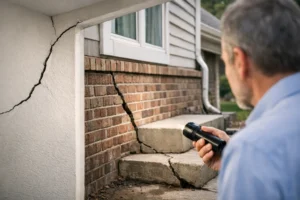
When a roof failure, hidden moisture issue, or aging mechanical system shows up after a purchase or during a budget cycle, the cost is rarely limited to the repair itself. It affects timelines, tenant satisfaction, operating budgets, and confidence in the decision-making process. A facility condition assessment helps prevent that kind of uncertainty by giving owners, investors, and managers a clear picture of how a building is performing, where deficiencies exist, and what those findings mean in practical terms.
What a facility condition assessment actually does
A facility condition assessment is a detailed evaluation of a building’s current condition. The goal is not just to document visible defects. It is to identify material concerns, understand the remaining service life of key components, and support decisions about repairs, maintenance, budgeting, and risk.
For commercial properties, that often includes the roof, exterior envelope, interior finishes, site features, electrical systems, plumbing, HVAC equipment, life-safety elements, and areas showing signs of active damage or deferred maintenance. In some cases, the assessment also considers how deficiencies may affect operations, occupant comfort, insurance concerns, or future capital planning.
The value is in turning scattered observations into usable guidance. A good report does more than say what is wrong. It helps you understand what needs attention now, what can be planned for later, and where further investigation may be warranted.
Why facility condition assessments matter before costs escalate
Many building issues do not begin as emergencies. They begin as minor water intrusion, aging sealants, uneven performance in mechanical equipment, or maintenance items that were deferred one budget too many. Left alone, those conditions tend to spread. What could have been a manageable repair becomes a larger project with more disruption and more expense.
That is why a facility condition assessment is often most useful before a transaction closes, before a portfolio changes hands, or before an annual capital plan is finalized. It gives stakeholders a factual basis for negotiating repairs, forecasting reserve needs, and prioritizing work.
This matters just as much for long-held properties as it does for acquisitions. Owners and property managers can use the findings to justify maintenance spending, schedule phased improvements, and reduce the guesswork that often slows decision-making. When reporting is clear, teams spend less time debating whether a problem is real and more time deciding how to address it.
What is typically included in the assessment
The scope depends on the property type, age, size, and purpose of the evaluation. A single-site office building, a retail center, and an institutional facility will not always require the same level of review. Still, most assessments focus on the same core objective – documenting present condition and likely needs.
A thorough process usually starts with a site visit and visual inspection of accessible building components. Inspectors review observed conditions, note signs of deterioration or damage, and document findings with high-resolution photographs. If the assignment calls for it, advanced tools such as thermal imaging or moisture detection can help identify conditions that are not obvious during a standard visual review.
That extra layer matters in real-world situations. Staining may suggest a past leak, but moisture mapping can help determine whether the issue is active. A wall or ceiling may appear intact, while temperature differentials point to hidden performance concerns. The best assessments combine field observation with practical interpretation so the client is not left trying to decode the evidence alone.
In many cases, records review also adds value. Maintenance history, repair invoices, replacement dates, and prior reports can help place current findings in context. A ten-year-old unit nearing expected end of life presents a different planning issue than a newer system already showing premature wear.
What the final report should help you decide
A facility condition assessment is most useful when the report supports action. That means organized findings, clear descriptions, photo documentation, and recommendations that reflect both urgency and likely impact.
For buyers and investors, the report should help answer whether the property’s condition aligns with the deal terms and whether near-term capital needs have been underestimated. For owners and managers, it should support maintenance planning, reserve forecasting, and repair prioritization. For legal, insurance, or claims-related matters, clear documentation can also provide an important record of observed conditions at a specific point in time.
Not every deficiency requires immediate correction. That is one of the reasons professional judgment matters. Some items are routine maintenance. Some are deferred repairs that can be scheduled. Others may create ongoing damage, operational disruption, or elevated liability if left unresolved. A useful report makes those distinctions clear.
Common situations where a facility condition assessment makes sense
Transactions are an obvious trigger, but they are not the only one. A facility condition assessment is also valuable when a building has recurring leaks, unexplained interior damage, aging systems, or a maintenance backlog that has become difficult to manage.
Property managers often need an objective outside evaluation before presenting repair priorities to ownership. Portfolio owners may need consistent reporting across multiple assets to compare condition and plan capital spending. Schools, healthcare facilities, retail operators, and industrial users may also need condition data to support long-range budgeting while keeping facilities functional.
There are also times when the issue is not broad deterioration but a specific concern that needs careful documentation. If moisture intrusion is affecting finishes, if a roof is underperforming earlier than expected, or if visible damage raises questions about cause and scope, an assessment can establish what is observable and what next steps make sense.
What separates a useful assessment from a superficial one
Not all inspection reports provide the same level of decision support. A short checklist with limited commentary may confirm that issues exist, but it may not help much when you need to assign budgets, coordinate repairs, or explain risk to partners and stakeholders.
A stronger assessment is methodical. It is grounded in field evidence, supported by quality images, and written in plain language. It avoids vague language that leaves too much open to interpretation. It also respects the difference between observation and speculation. If a condition suggests a larger concealed issue, the report should say so clearly and recommend the appropriate next step rather than overstate certainty.
Speed matters too, but only if accuracy stays intact. In many commercial settings, clients need timely reporting to stay on schedule during due diligence, claims handling, or maintenance planning. Clear turnaround and organized documentation can make a major difference when multiple parties are involved.
This is where experienced inspection firms stand apart. Archer Professional Inspections, for example, approaches building evaluation with a focus on thorough on-site assessment, detailed reporting, and practical recommendations clients can actually use. That kind of clarity is what turns an inspection from a formality into a tool for better decisions.
How to get more value from the process
The best results usually come from matching the scope to the decision you need to make. If the building is part of an acquisition, the assessment should be framed around risk, repair needs, and likely capital exposure. If the property is already in operation, the focus may be on maintenance planning, active problem areas, and budgeting over the next several years.
It also helps to share what is already known. Prior leak history, recurring complaints, planned renovations, and known system age can guide attention to the right areas without limiting the inspector’s independence. Good assessments are informed, not scripted.
Finally, treat the report as a planning document, not just a file to store after closing. The most useful assessments continue to deliver value after the initial inspection by helping owners phase repairs, document baseline conditions, and track how issues change over time.
Buildings rarely become risky all at once. More often, they give clear signals before costs rise. A careful facility condition assessment helps you catch those signals early enough to act with confidence.